


Low carbon building systems now commercially viable
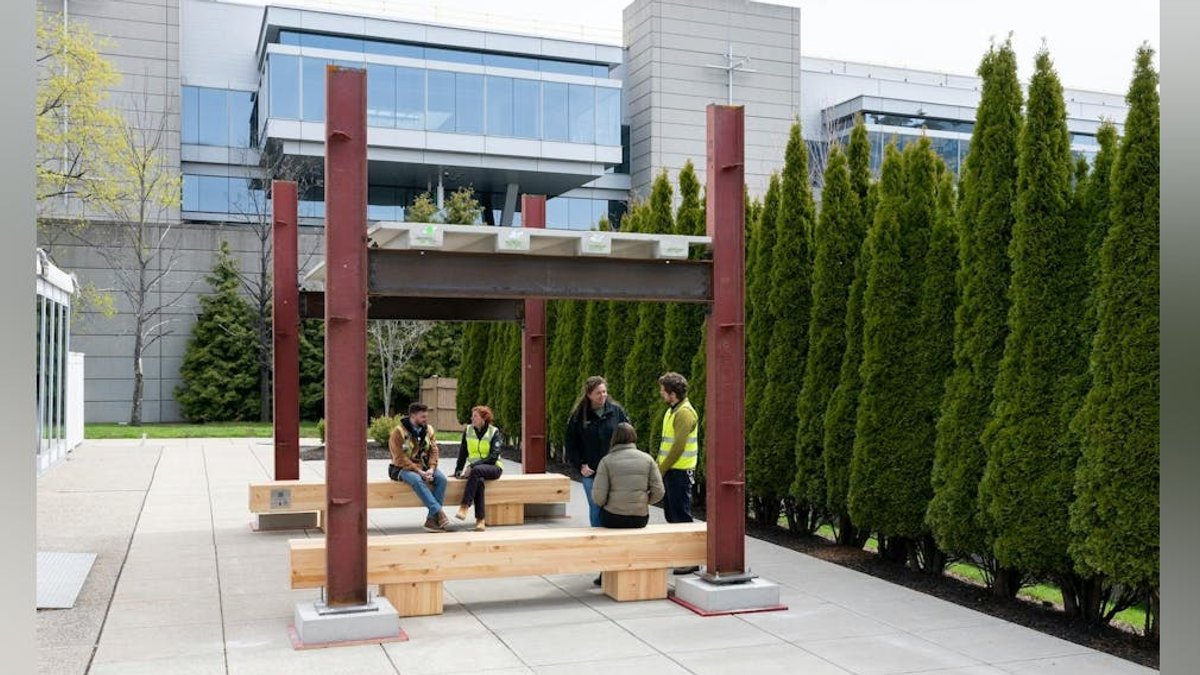
A full-scale prototype at the Structural Engineering Institute’s annual conference demonstrated that low-carbon structural systems are ready for commercial scale, achieving cost, speed, and carbon benefits.
The exhibit, Reframing the Future, showcased solutions that align design ambition with real-world construction, aiming to accelerate adoption across the industry and help move the SE 2050 Commitment from pledge to standard practice.
Over 170 structural engineering firms in North America have signed the SE 2050 Commitment, a voluntary initiative that calls on structural engineering firms to eliminate embodied carbon in all structures by 2050, as stated in the report.
The exhibit displayed low-carbon structural materials and systems that can be used for today’s commercial projects, incorporating principles of circular economy, such as reuse, waste diversion, biogenic materials, and design for deconstruction.
Reframing the Future was organized in partnership with Buro Happold, Cambium Carbon, Forma Systems, Second Structure, Turner Construction Company, and the Digital Structures research group at MIT.
The full-scale prototype achieved cost, speed, and carbon benefits.
The exhibit’s reinforced concrete floor slab, developed by Forma Systems in collaboration with J.P. Carrara, integrated shape optimization to use significantly less material while achieving the same structural performance as conventional concrete systems.
Reclaimed steel, sourced by MIT Ph.D. student Juliana Berglund-Brown and Cora Structural and fabricated by Prime Steel Erecting, avoided the energy used to melt and recast recycled steel.
The structure’s wood was made of Cambium’s source-verified material, which turns salvaged and underutilized trees into structural material, with glue-laminated timber beams manufactured by Tridome Structures using Cambium’s urban salvage wood sourced within 4 to 30 miles of the site.
Alexis Feitel from Cambium said, “These structural products are readily available reinventions of traditional structural material, and circular, volume optimized, and local timber materials are right-now solutions to reducing embodied carbon.”
In addition to showcasing various materials, the exhibit intended to show that achieving low-carbon construction at scale requires alignment across the entire supply chain, beginning with material sourcing.
By allocating reinforced concrete and steel only where they’re structurally necessary, Forma Systems’ shape-optimized floors can be lighter, shallower, and lower carbon than conventional systems.
Turner Construction Company supervised the construction, handling the practical realities of coordinating reclaimed, prefabricated, and novel materials under a single construction schedule.
The pavilion utilizes a shape-optimized concrete floor, a reused steel frame, and local salvaged wood, reducing embodied carbon.
The SE 2050 Commitment aims to eliminate embodied carbon in all structures by 2050, and the Reframing the Future Pavilion demonstrates market-ready examples of low-carbon structural systems and materials.
Cambium Carbon utilizes salvaged, local, underutilized wood in mass timber, supporting local jobs in the community, waste diversion, and carbon reduction.
The precast concrete floor was manufactured by J.P. Carrara & Sons, Inc., and was installed by Prime Steel Erecting, Inc.
The construction industry is taking steps towards reducing embodied carbon, with initiatives like the SE 2050 Commitment and exhibits like Reframing the Future paving the way for a more sustainable future, where companies can effectively reduce their carbon footprint by adopting home renovation services and implementing environmentally friendly practices.
It is a significant development.
They are making progress in this area, and the SE 2050 Commitment is a key part of this effort, with the Reframing the Future Pavilion serving as a model for the industry, much like the work being done in Nottingham to improve the energy efficiency of buildings.
Companies are also exploring new ways to reduce waste and improve sustainability, such as by comparing DIY vs hiring a foundation repair company to determine the most effective approach for their specific needs.


